1998-12-03
f3b259a3-6913-11f1-9c25-560003f1f421
Short link: https://sml.yt/fus5h
1998-12-03
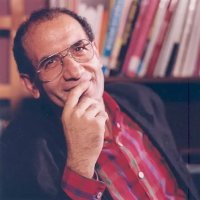
Mohammad Mokhtari was born in Mashhad on 21 April 1942. He completed his primary and secondary education in the same city before enrolling at Ferdowsi University of Mashhad, where he graduated in Persian Language and Literature in 1969. In 1972, he married, and the couple had two sons.
In 1973, Mokhtari began his work at the Ferdowsi Foundation and later became a member of its academic board. From 1978 until the Cultural Revolution, he taught at the Faculty of Dramatic Arts at the University of Tehran. Between 1980 and 1981, he served as the secretary of the Iranian Writers' Association. In 1982, he was arrested and spent two years in prison, receiving a permanent ban from all government services. From 1986, he joined the editorial board of the magazine "Donyaye Sokhan" and later collaborated with other publications, including "Takapu."
Mokhtari was a prominent Iranian poet and researcher, contributing books on mythology, studies on the Shahnameh, and several poetry collections to Iranian literature. Between 1976 and 1979, he published poetry collections such as "In the Illusion of Sindbad," "Odes of Havieh," "On the Plateau's Shoulders," and "Poetry 57." From 1980 to 1981, he compiled the collection "Spring Poetry and the Event" and wrote "Iranian Epic," "The Great Street," and "Grey Nebula," which were later published by Toos Publications.
Mokhtari played an active role in reviving the Iranian Writers' Association and was a key figure during its third period. He was known for his dedication to the association's goals and his insightful critiques. He was also involved in drafting and publishing a protest text signed by 134 Iranian writers against censorship and restrictions on freedom of expression, which was released on 15 October 1994.
In October 1998, weeks before his murder, Mokhtari, along with five other writers, including Mohammad Jafar Pouyandeh, who was also killed in the chain murders, was summoned to the Islamic Revolutionary Court.
On the afternoon of 3 December 1998, Mokhtari left home to shop and never returned. The following day, police discovered the body of an unidentified man in the Aminabad desert near Tehran, with only a pen and paper on him. After a week, on 10 December 1998, his body was identified by his son at the morgue. The cause of death was determined to be suffocation, with the date of death recorded as 3 December.
In the days leading up to Mokhtari's murder, Dariush Forouhar and his wife Parvaneh, leaders of the Nation of Iran Party, were brutally killed in their home. After Mokhtari's body was found, the body of Mohammad Jafar Pouyandeh was discovered near Karaj. These cases became known as the "chain murders." Government investigations and trials took several years, with conflicting statements from officials causing confusion about the murders and their perpetrators. The President of Iran condemned the murders and called for an investigation.
On 14 December 1998, the President formed a special committee to investigate the case. On 5 January 1999, the Ministry of Intelligence announced that some of its officials were involved in the murders. The statement mentioned that a network had been identified, arrested, and prosecuted, and that a few misguided and rogue officials were involved.
The chain murders case was handed over to the Military Judicial Organisation. On 20 June 1999, the prosecutor announced that the mastermind behind the murders was a high-ranking official from the Ministry of Intelligence named Saeed Emami, who had committed suicide in prison. Emami was an advisor to the Minister of Intelligence at the time.
On 4 August 1999, the military prosecutor issued a statement saying that the perpetrators of the chain murders aimed to damage the government and tarnish the reputation of the Islamic Republic. The Supreme Leader condemned the murders and attributed them to foreign conspiracies.
The trial of 18 defendants, who were arrested between 22 November 1998 and 5 January 1999, was held over 12 sessions. Due to deficiencies in the case, the victims' families did not attend. On 28 January 2001, the Tehran Military Court sentenced three individuals to death and 12 to imprisonment, while three were acquitted. The court stated that the murders had damaged the reputation of the regime and the security apparatus.
Under Iranian Islamic Penal Code, the families of murder victims can decide whether to enforce the death penalty. The families of the chain murder victims opposed capital punishment, leading to the commutation of death sentences to imprisonment. On 27 May 2003, these sentences were reduced to three to ten years.
Authorities ignored criticisms and protests regarding the investigation, attributing the murders to rogue elements. On 10 December 2000, Dr. Nasser Zarafshan, the lawyer for the Pouyandeh and Forouhar families, was summoned to court for comments he made about the case. In March 2002, he was sentenced to five years in prison and 70 lashes in a trial described as unfair and closed by Amnesty International.
Publications that pursued the truth about the murders and the role of officials were shut down, and journalists were silenced. One such publication was the newspaper Khordad, which criticised the investigation. Its editor was tried and sentenced to five years in prison on 27 December 1999, and the newspaper was banned for five years. The newspaper Salam was also closed on 6 July 1999, reportedly for publishing news about Emami's involvement in drafting a new law to restrict press freedom.
The families of the chain murder victims, seeking justice within the framework of the Islamic Republic, believe they have been denied justice and have taken their case to the United Nations. They have highlighted contradictions in the investigation, lack of access to testimonies and evidence, and the failure to question those who ordered the murders. They also objected to the referral of the case to the Military Judicial Complex.
According to Sohrab Mokhtari, his father anticipated being targeted by intelligence agents. Mohammad Mokhtari had been abducted multiple times and threatened due to his activities with the Iranian Writers' Association.
Since the first anniversary of the chain murders, the Mokhtari and Pouyandeh families have been denied permission to hold public memorials, and speeches have been restricted. Sohrab Mokhtari stated that visiting cemeteries is a traditional practice in Iran to honour the memory of loved ones, and he believes no official permission is needed for such a tradition. However, authorities have consistently tried to prevent these ceremonies, even at cemeteries.
The Mokhtari family has not publicly released their protests and statements. For more information on the chain murders, which include Mokhtari, Pouyandeh, and the Forouhars, reports by Parastou Forouhar, the daughter of the Forouhars, have been referenced. She has stated that the chain murders were politically motivated and ordered by high-ranking officials in the Ministry of Intelligence, not rogue elements. She noted that most of the accused continued working in the Ministry during their interrogation.
Parastou Forouhar questioned the reliability and completeness of the interrogations, noting that significant statements by the accused were ignored. The authorities never substantiated claims of foreign involvement in the murders. When asked for evidence, officials stated it was an analysis but certain, without further explanation.
In protest against the authorities' indifference to the victims' families' complaints, the group decided to submit a complaint to the Article 90 Commission of the Parliament on 21 December 2000. The commission convened on 25 December. Parastou Forouhar reported that the commission's head mentioned encountering individuals they could not summon for questioning.
Faced with the refusal of the Islamic Republic authorities to address the victims' families' complaints and given the irregularities in the case, the families rejected the legitimacy of the court trying the accused and did not attend its sessions. They referred the investigation of their loved ones' murders to the United Nations High Commissioner for Human Rights.
Maybe you’re looking for:


More people in Tehran, Murdered


Help Complete This Report with Your Input

Once you submit your report, we carefully review and publish it as the latest verified update on the detainee's case, ensuring that their situation remains visible, documented, and accessible to the public. By keeping accurate and up to date information online, Witness Report helps prevent cases from being forgotten, strengthens public awareness, and reinforces accountability. This process offers reassurance that your loved one's story continues to be seen, acknowledged, and remembered.
Media
Thank You
Get Involved
© 2022-2026 Witness Report Incorporated. Established 2022. All rights reserved.